REVOLUTIONARY WAR: Concord Hymn (Ralph Waldo Emerson)

Battle of Bunkers Hill (John Trumbull)


By the rude bridge that arched the flood,
Their flag to April's breeze unfurled,
Here once the embattled farmers stood,
And fired the shot heard round the world.


The foe long since in silence slept;
Alike the conqueror silent sleeps;
And Time the ruined bridge has swept
Down the dark stream which seaward creeps.


On this green bank, by this soft stream,
We set to-day a votive stone;
That memory may their deed redeem,
When, like our sires, our sons are gone.


Spirit, that made those heroes dare
To die, and leave their children free,
Bid Time and Nature gently spare
The shaft we raise to them and thee.


__________________________


Ralph Waldo Emerson (1803-1882) wrote this poem, which was sung as a hymn at a July 4, 1837, ceremony to mark the completion of the Concord Monument, to immortalize the resistance of American Minutemen to British forces on April 19, 1775.


-----------------------------------------------------


We would like to read your war stories, poems, and essays and, possibly, even post them in this blog.

This comment section is reserved for work having to do with the REVOLUTIONARY WAR.

Feel free to include a short bio.

If you submit your work in the comment section, we may even elevate it to a post.

In any case, we will likely leave it in the comment section.

By submitting here, you represent that you have written the piece and own the copyright.

Previously published work welcome.

THE COLD WAR: What is "Fail-Safe"? (Poem by Samantha Colandrea)


What does "fail-safe" even stand for?
To make sure everything goes right?
Is it to make sure in the worst situation?
That the plane will still take flight?
.
It began when a plane was spotted from Europe
The SAC declared it as a possible threat
But they are not allowed to proceed without orders
So they left it alone without fret
.
The SAC declared for an attack code
They created a bomber group made up of six
The orders are misunderstood because of the radar
And now it is too late for a fix
.
The thought of nuclear war
Causes Colonel to send out the crew
The six flights go toward Moscow
He did not know what else to do
.
Groteschele makes the suggestion
That the U.S. should begin
An attack to make the Soviets
Surrender and give in
.
They made the attack look accidental
This was actually pretty cruel
Except they didn't think it through
And ran out of gas and fuel
.
All six flights went down
And landed them in the sea
The pilots were all dead
And the other plane went free
.
The Soviets make an agreement
With the President of the U.S.
They decline his request at first
But ended up saying yes
.
The air defense shoots down two
Of the six planes unarmed
But the sixth plane should be left alone
Because it will do no harm
.
Because of another disagreement
The sixth plane gets attacked
This was a mistake
That they weren't able to take back
.
The President tries to tell Grady
That there is no war going on
Grady doesn't believe him
And sees it as a con
.
They sent a plane to Moscow
To destroy the city for the "good"
Except this causes a bombing on New York
The Soviets would do what they could
.
The moral of these attacks
Is that war is not worth fighting
It causes all the authorities to argue
When we all should be uniting

__________________

Samantha Colandrea is a college student who responded to the book and film Fail-Safe by writing a poem about it.

-------------------------

We would like to read your war stories, poems, and essays and, possibly, even post them in this blog.
.
This comment section is reserved for work having to do with the THE COLD WAR (circa 1945-1990).
.
Feel free to include a short bio.
.
If you submit your work in the comment section, we may even elevate it to a post.
.
In any case, we will likely leave it in the comment section.
.
By submitting here, you represent that you have written the piece and own the copyright.
.
Previously published work welcome.
.

VIETNAM WAR: Stateside (poem by Jerry Siegel)

(A U.S. Air Force HH-3 helicopter crewman fires a mini-gun during rescue patrol
over South Vietnam, 10/17/1968)
_________________________
.
When Lou came to our outfit, fresh from Viet Nam,
He was just another helicopter jockey
Back stateside from his stint as an
Advisor to a war no one was fighting,
And he didn't talk much to anyone
Except when he drank.
Every afternoon in the second-floor
Officers' Club, he'd explain MAAG Viet Nam.
The Vietnamese he'd met liked Americans
Better than they liked the Viet Cong.
After they blew up the villages and bridges, the
Americans returned and built new, better bridges.
But now Lou was back in our world and
Doing just fine, thank you, helping defend
Dallas's suburbs against bomber attacks.
Except sometimes he'd thrash out in the night
Against his wife, Pam, who in dark dreams looked
Like Charlie. And sometimes, he'd jump at
Loud noises on TV. And sometimes, when we flew
Over to Delta Battery, he'd drop to tree top level
As we cruised over old Highway 80 between
The Texaco station and the diner, keeping his
Approach to the side of the red brick road,
Shielded by pines from hostile Texas mortar fire.
.
__________________________
.
Jerry Siegel, a three-time Fulbright scholar, teaches literature and writing at York College of Pennsylvania. He is also the husband of the webmaster.
.
--------------------------------------
.
We would like to read your war stories, poems, and essays and, possibly, even post them in this blog.

This comment section is reserved for work having to do with the VIETNAM WAR.

Feel free to include a short bio.

If you submit your work in the comment section, we may even elevate it to a post.

In any case, we will likely leave it in the comment section.

By submitting here, you represent that you have written the piece and own the copyright.

Previously published work welcome.

THE CIVIL WAR: Come Up From the Fields, Father (Walt Whitman)


Come up from the fields, father, here's a letter from our Pete,
And come to the front door, mother, here's a letter from thy dear son.
.
Lo, 'tis autumn,
Lo, where the trees, deeper green, yellower and redder,
.
Cool and sweeten Ohio's villages with leaves fluttering in the moderate wind,
Where apples ripe in the orchards hang and grapes on the trellis'd vines,
(Smell you the smell of the grapes on the vines?
Smell you the buckwheat where the bees were lately buzzing?)
.
Above all, lo, the sky so calm, so transparent after the rain, and with wondrous clouds,
Below too, all calm, all vital and beautiful, and the farm prospers well.
.
Down in the fields all prospers well,
But now from the fields come father, come at the daughter's call.
And come to the entry mother, to the front door come right away.
.
Fast as she can she hurries, something ominous, her steps trembling,
She does not tarry to smooth her hair nor adjust her cap.
.
Open the envelope quickly,
O this is not our son's writing, yet his name is sign'd,
O a strange hand writes for our dear son, O stricken mother's soul!
All swims before her eyes, flashes with black, she catches the main words only,
Sentences broken, gunshot wound in the breast, cavalry skirmish, taken to hospital,
At present low, but will soon be better.
.
Ah now the single figure to me,
Amid all teeming and wealthy Ohio with all its cities and farms,
Sickly white in the face and dull in the head, very faint,
By the jamb of a door leans.
.
Grieve not so, dear mother, (the just-grown daughter speaks through her sobs,
The little sisters huddle around speechless and dismay'd,)
See, dearest mother, the letter says Pete will soon be better.
.
Alas poor boy, he will never be better, (nor may-be needs to be better, that brave and simple soul,)
While they stand at home at the door he is dead already,
The only son is dead.
.
But the mother needs to be better,
She with thin form presently drest in black,
By day her meals untouch'd, then at night fitfully sleeping, often waking,
In the midnight waking, weeping, longing with one deep longing,
O that she might withdraw unnoticed, silent from life escape and withdraw,
To follow, to seek, to be with her dear dead son.
.
________________
.
From Leaves of Grass
.
________________
.
We would like to read your war stories, poems, and essays and, possibly, even post them in this blog.
.
This comment section is reserved for work having to do with the U.S. CIVIL WAR.
.
Feel free to include a short bio.
.
If you submit your work in the comment section, we may even elevate it to a post.
.
In any case, we will likely leave it in the comment section.
.
By submitting here, you represent that you have written the piece and own the copyright.
.
Previously published work welcome.

IRAQ WAR (2003-Present): Under Construction

We would like to read your war stories, poems, and essays and, possibly, even post them in this blog.

This comment section is reserved for work having to do with the IRAQ WAR (2003-Present).

Feel free to include a short bio.

If you submit your work in the comment section, we may even elevate it to a post.

In any case, we will likely leave it in the comment section.

By submitting here, you represent that you have written the piece and own the copyright.

Previously published work welcome.

GULF WAR (1990-1991): Under Construction

We would like to read your war stories, poems, and essays and, possibly, even post them in this blog.

This comment section is reserved for work having to do with the GULF WAR (1990-1991).

Feel free to include a short bio.

If you submit your work in the comment section, we may even elevate it to a post.

In any case, we will likely leave it in the comment section.

By submitting here, you represent that you have written the piece and own the copyright.

Previously published work welcome.

KOREAN WAR: Under Construction

We would like to read your war stories, poems, and essays and, possibly, even post them in this blog.

This comment section is reserved for work having to do with the KOREAN WAR.

Feel free to include a short bio.

If you submit your work in the comment section, we may even elevate it to a post.

In any case, we will likely leave it in the comment section.

By submitting here, you represent that you have written the piece and own the copyright.

Previously published work welcome.

WORLD WAR I: Dulce et Decorum Est (Wilfred Owen)


Bent double, like old beggars under sacks,
Knock-kneed, coughing like hags, we cursed through sludge,
Till on the haunting flares we turned our backs
And towards our distant rest began to trudge.
Men marched asleep. Many had lost their boots
But limped on, blood-shod. All went lame; all blind;
Drunk with fatigue; deaf even to the hoots
Of tired, outstripped Five-Nines that dropped behind.

Gas! Gas! Quick, boys! – An ecstasy of fumbling,
Fitting the clumsy helmets just in time;
But someone still was yelling out and stumbling,
And flound'ring like a man in fire or lime . . .
Dim, through the misty panes and thick green light,
As under a green sea, I saw him drowning.

In all my dreams, before my helpless sight,
He plunges at me, guttering, choking, drowning.

If in some smothering dreams you too could pace
Behind the wagon that we flung him in,
And watch the white eyes writhing in his face,
His hanging face, like a devil's sick of sin;
If you could hear, at every jolt, the blood
Come gargling from the froth-corrupted lungs,
Obscene as cancer, bitter as the cud
Of vile, incurable sores on innocent tongues,--
My friend, you would not tell with such high zest
To children ardent for some desperate glory,
The old Lie: Dulce et Decorum est
Pro patria mori (1).

October 8, 1917 - March, 1918

___________________________

(1) It is sweet and proper to die for one's country. --Horace

_________________________________

We would like to read your war stories, poems, and essays and, possibly, even post them in this blog.

This comment section is reserved for work having to do with WORLD WAR I.

Feel free to include a short bio.

If you submit your work in the comment section, we may even elevate it to a post.

In any case, we will likely leave it in the comment section.

By submitting here, you represent that you have written the piece and own the copyright.

Previously published work welcome.
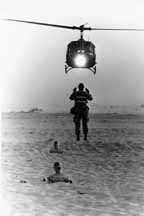
WAR ON TERROR: Under Construction

We would like to read your war stories, poems, and essays and, possibly, even post them in this blog.
.
This comment section is reserved for work having to do with the WAR ON TERROR (on-going).
.
Feel free to include a short bio.
.
If you submit your work in the comment section, we may even elevate it to a post.
.
In any case, we will likely leave it in the comment section.
.
By submitting here, you represent that you have written the piece and own the copyright.
.
Previously published work welcome.

WAR IN AFGHANISTAN: Under Construction

We would like to read your war stories, poems, and essays and, possibly, even post them in this blog.
.
This comment section is reserved for work having to do with the WAR IN AFGHANISTAN (2001-Present).
.
Feel free to include a short bio.
.
If you submit your work in the comment section, we may even elevate it to a post.
.
In any case, we will likely leave it in the comment section.
.
By submitting here, you represent that you have written the piece and own the copyright.
.
Previously published work welcome.