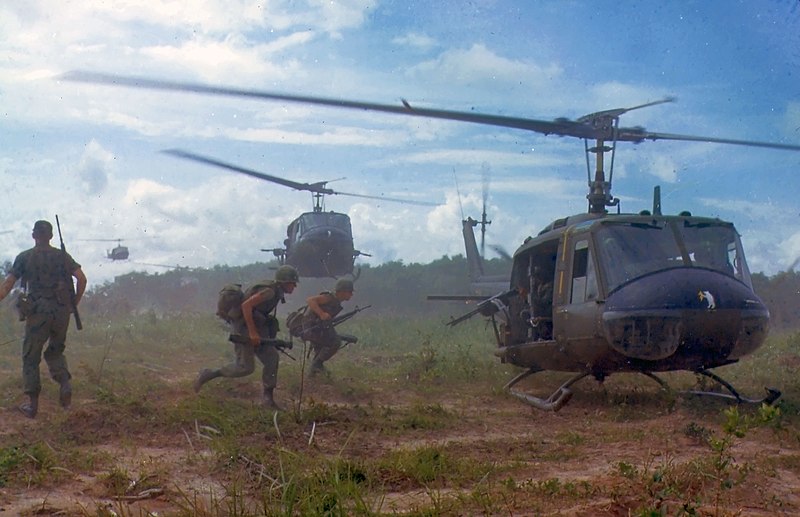
*
You have heard from a great many people who did something in the war; is it not fair and right that you listen a little moment to one who started out to do something in it, but didn't? Thousands entered the war, got just a taste of it, and then stepped out again, permanently. These, by their very numbers, are respectable, and are therefore entitled to a sort of voice--not a loud one, but a modest one; not a boastful one, but an apologetic one. They ought not to be allowed much space among better people--people who did something--I grant that; but they ought at least to be allowed to state why they didn't do anything, and also to explain the process by which they didn't do anything. Surely this kind of light must have a sort of value.
.
Out West there was a good deal of confusion in men's minds during the first months of the great trouble--a good deal of unsettledness, of leaning first this way, then that, then the other way. It was hard for us to get our bearings. I call to mind an instance of this. I was piloting on the Mississippi when the news came that South Carolina had gone out of the Union on December 20, 1860. My pilot-mate was a New Yorker. He was strong for the Union; so was I. But he would not listen to me with any patience; my loyalty was smirched, to his eye, because my father had owned slaves. I said, in palliation of this dark fact, that I had heard my father say, some years before he died, that slavery was a great wrong, and that he would free the solitary Negro he then owned if he could think it right to give away the property of the family when he was so straitened in means. My mate retorted that a mere impulse was nothing--anybody could pretend to a good impulse; and went on decrying my Unionism and libelling my ancestry. A month later the secession atmosphere had considerably thickened on the Lower Mississippi, and I became a rebel; so did he. We were together in New Orleans, January 26, when Louisiana went out of the Union. He did his full share of the rebel shouting, but was bitterly opposed to letting me do mine. He said that I came of bad stock--of a father who had been willing to set slaves free. In the following summer he was piloting a Federal gun-boat and shouting for the Union again, and I was in the Confederate army. I held his note for some borrowed money. He was one of the most upright men I ever knew; but he repudiated that note without hesitation, because I was a rebel, and the son of a man who had owned slaves.
.
In that summer--of 1861--the first wash of the wave of war broke upon the shores of Missouri. Our State was invaded by the Union forces. They took possession of St. Louis, Jefferson Barracks, and some other points. The Governor, Claib Jackson, issued his proclamation calling out fifty thousand militia to repel the invader.
.
I was visiting in the small town where my boyhood had been spent-- Hannibal, Marion County. Several of us got together in a secret place by night and formed ourselves into a military company. One Tom Lyman, a young fellow of a good deal of spirit but of no military experience, was made captain; I was made second lieutenant. We had no first lieutenant; I do not know why; it was long ago. There were fifteen of us. By the advice of an innocent connected with the organisation, we called ourselves the Marion Rangers. I do not remember that any one found fault with the name. I did not; I thought it sounded quite well. The young fellow who proposed this title was perhaps a fair sample of the kind of stuff we were made of. He was young, ignorant, good-natured, well- meaning, trivial, full of romance, and given to reading chivalric novels and singing forlorn love-ditties. He had some pathetic little nickel- plated aristocratic instincts, and detested his name, which was Dunlap; detested it, partly because it was nearly as common in that region as Smith, but mainly because it had a plebeian sound to his ear. So he tried to ennoble it by writing it in this way: d'Unlap. That contented his eye, but left his ear unsatisfied, for people gave the new name the same old pronunciation--emphasis on the front end of it. He then did the bravest thing that can be imagined--a thing to make one shiver when one remembers how the world is given to resenting shams and affectations; he began to write his name so: d'Un Lap. And he waited patiently through the long storm of mud that was flung at this work of art, and he had his reward at last; for he lived to see that name accepted, and the emphasis put where he wanted it, by people who had known him all his life, and to whom the tribe of Dunlaps had been as familiar as the rain and the sunshine for forty years. So sure of victory at last is the courage that can wait. He said he had found, by consulting some ancient French chronicles, that the name was rightly and originally written d'Un Lap; and said that if it were translated into English it would mean Peterson: Lap, Latin or Greek, he said, for stone or rock, same as the French Pierre, that is to say, Peter; d', of or from; un, a or one; hence d'Un Lap, of or from a stone or a Peter; that is to say, one who is the son of a stone, the son of a Peter--Peterson. Our militia company were not learned, and the explanation confused them; so they called him Peterson Dunlap. He proved useful to us in his way; he named our camps for us, and he generally struck a name that was 'no slouch,' as the boys said.
.
That is one sample of us. Another was Ed Stevens, son of the town jeweller,--trim-built, handsome, graceful, neat as a cat; bright, educated, but given over entirely to fun. There was nothing serious in life to him. As far as he was concerned, this military expedition of ours was simply a holiday. I should say that about half of us looked upon it in the same way; not consciously, perhaps, but unconsciously. We did not think; we were not capable of it. As for myself, I was full of unreasoning joy to be done with turning out of bed at midnight and four in the morning, for a while; grateful to have a change, new scenes, new occupations, a new interest. In my thoughts that was as far as I went; I did not go into the details; as a rule one doesn't at twenty- five.
.
Another sample was Smith, the blacksmith's apprentice. This vast donkey had some pluck, of a slow and sluggish nature, but a soft heart; at one time he would knock a horse down for some impropriety, and at another he would get homesick and cry. However, he had one ultimate credit to his account which some of us hadn't: he stuck to the war, and was killed in battle at last.
.
Jo Bowers, another sample, was a huge, good-natured, flax-headed lubber; lazy, sentimental, full of harmless brag, a grumbler by nature; an experienced, industrious, ambitious, and often quite picturesque liar, and yet not a successful one, for he had had no intelligent training, but was allowed to come up just any way. This life was serious enough to him, and seldom satisfactory. But he was a good fellow, anyway, and the boys all liked him. He was made orderly sergeant; Stevens was made corporal.
.
These samples will answer--and they are quite fair ones. Well, this herd of cattle started for the war. What could you expect of them? They did as well as they knew how, but really what was justly to be expected of them? Nothing, I should say. That is what they did.
.
We waited for a dark night, for caution and secrecy were necessary; then, toward midnight, we stole in couples and from various directions to the Griffith place, beyond the town; from that point we set out together on foot. Hannibal lies at the extreme south-eastern corner of Marion County, on the Mississippi River; our objective point was the hamlet of New London, ten miles away, in Ralls County.
.
The first hour was all fun, all idle nonsense and laughter. But that could not be kept up. The steady trudging came to be like work; the play had somehow oozed out of it; the stillness of the woods and the sombreness of the night began to throw a depressing influence over the spirits of the boys, and presently the talking died out and each person shut himself up in his own thoughts. During the last half of the second hour nobody said a word.
.
Now we approached a log farm-house where, according to report, there was a guard of five Union soldiers. Lyman called a halt; and there, in the deep gloom of the overhanging branches, he began to whisper a plan of assault upon that house, which made the gloom more depressing than it was before. It was a crucial moment; we realised, with a cold suddenness, that here was no jest--we were standing face to face with actual war. We were equal to the occasion. In our response there was no hesitation, no indecision: we said that if Lyman wanted to meddle with those soldiers, he could go ahead and do it; but if he waited for us to follow him, he would wait a long time.
.
Lyman urged, pleaded, tried to shame us, but it had no effect. Our course was plain, our minds were made up: we would flank the farmhouse-- go out around. And that is what we did. We turned the position.
.
We struck into the woods and entered upon a rough time, stumbling over roots, getting tangled in vines, and torn by briers. At last we reached an open place in a safe region, and sat down, blown and hot, to cool off and nurse our scratches and bruises. Lyman was annoyed, but the rest of us were cheerful; we had flanked the farm-house, we had made our first military movement, and it was a success; we had nothing to fret about, we were feeling just the other way. Horse-play and laughing began again; the expedition was become a holiday frolic once more.
.
Then we had two more hours of dull trudging and ultimate silence and depression; then, about dawn, we straggled into New London, soiled, heel- blistered, fagged with our little march, and all of us except Stevens in a sour and raspy humour and privately down on the war. We stacked our shabby old shot-guns in Colonel Ralls's barn, and then went in a body and breakfasted with that veteran of the Mexican War. Afterwards he took us to a distant meadow, and there in the shade of a tree we listened to an old-fashioned speech from him, full of gunpowder and glory, full of that adjective-piling, mixed metaphor, and windy declamation which was regarded as eloquence in that ancient time and that remote region; and then he swore us on the Bible to be faithful to the State of Missouri and drive all invaders from her soil, no matter whence they might come or under what flag they might march. This mixed us considerably, and we could not make out just what service we were embarked in; but Colonel Ralls, the practised politician and phrase-juggler, was not similarly in doubt; he knew quite clearly that he had invested us in the cause of the Southern Confederacy. He closed the solemnities by belting around me the sword which his neighbour, colonel Brown, had worn at Buena Vista and Molino del Rey; and he accompanied this act with another impressive blast.
.
Then we formed in line of battle and marched four miles to a shady and pleasant piece of woods on the border of the far-reached expanses of a flowery prairie. It was an enchanting region for war--our kind of war.
.
We pierced the forest about half a mile, and took up a strong position, with some low, rocky, and wooded hills behind us, and a purling, limpid creek in front. Straightway half the command were in swimming, and the other half fishing. The ass with the French name gave this position a romantic title, but it was too long, so the boys shortened and simplified it to Camp Ralls.
.
We occupied an old maple-sugar camp, whose half-rotted troughs were still propped against the trees. A long corn-crib served for sleeping quarters for the battalion. On our left, half a mile away, was Mason's farm and house; and he was a friend to the cause. Shortly after noon the farmers began to arrive from several directions, with mules and horses for our use, and these they lent us for as long as the war might last, which they judged would be about three months. The animals were of all sizes, all colours, and all breeds. They were mainly young and frisky, and nobody in the command could stay on them long at a time; for we were town boys, and ignorant of horsemanship. The creature that fell to my share was a very small mule, and yet so quick and active that it could throw me without difficulty; and it did this whenever I got on it. Then it would bray--stretching its neck out, laying its ears back, and spreading its jaws till you could see down to its works. It was a disagreeable animal, in every way. If I took it by the bridle and tried to lead it off the grounds, it would sit down and brace back, and no one could budge it. However, I was not entirely destitute of military resources, and I did presently manage to spoil this game; for I had seen many a steam-boat aground in my time, and knew a trick or two which even a grounded mule would be obliged to respect. There was a well by the corn-crib; so I substituted thirty fathom of rope for the bridle, and fetched him home with the windlass.
.
I will anticipate here sufficiently to say that we did learn to ride, after some days' practice, but never well. We could not learn to like our animals; they were not choice ones, and most of them had annoying peculiarities of one kind or another. Stevens's horse would carry him, when he was not noticing, under the huge excrescences which form on the trunks of oak-trees, and wipe him out of the saddle; in this way Stevens got several bad hurts. Sergeant Bowers's horse was very large and tall, with slim, long legs, and looked like a railroad bridge. His size enabled him to reach all about, and as far as he wanted to, with his head; so he was always biting Bowers's legs. On the march, in the sun, Bowers slept a good deal; and as soon as the horse recognised that he was asleep he would reach around and bite him on the leg. His legs were black and blue with bites. This was the only thing that could ever make him swear, but this always did; whenever the horse bit him he always swore, and of course Stevens, who laughed at everything, laughed at this, and would even get into such convulsions over it as to lose his balance and fall off his horse; and then Bowers, already irritated by the pain of the horse-bite, would resent the laughter with hard language, and there would be a quarrel; so that horse made no end of trouble and bad blood in the command.
.
However, I will get back to where I was--our first afternoon in the sugar-camp. The sugar-troughs came very handy as horse-troughs, and we had plenty of corn to fill them with. I ordered Sergeant Bowers to feed my mule; but he said that if I reckoned he went to war to be dry-nurse to a mule, it wouldn't take me very long to find out my mistake. I believed that this was insubordination, but I was full of uncertainties about everything military, and so I let the thing pass, and went and ordered Smith, the blacksmith's apprentice, to feed the mule; but he merely gave me a large, cold, sarcastic grin, such as an ostensibly seven-year-old horse gives you when you lift his lip and find he is fourteen, and turned his back on me. I then went to the captain, and asked if it was not right and proper and military for me to have an orderly. He said it was, but as there was only one orderly in the corps, it was but right that he himself should have Bowers on his staff. Bowers said he wouldn't serve on anybody's staff; and if anybody thought he could make him, let him try it. So, of course, the thing had to be dropped; there was no other way.
.
Next, nobody would cook; it was considered a degradation; so we had no dinner. We lazied the rest of the pleasant afternoon away, some dozing under the trees, some smoking cob-pipes and talking sweethearts and war, some playing games. By late supper-time all hands were famished; and to meet the difficulty all hands turned to, on an equal footing, and gathered wood, built fires, and cooked the meal. Afterward everything was smooth for a while; then trouble broke out between the corporal and the sergeant, each claiming to rank the other. Nobody knew which was the higher office; so Lyman had to settle the matter by making the rank of both officers equal. The commander of an ignorant crew like that has many troubles and vexations which probably do not occur in the regular army at all. However, with the song-singing and yarn-spinning around the camp-fire, everything presently became serene again; and by-and-by we raked the corn down level in one end of the crib, and all went to bed on it, tying a horse to the door, so that he would neigh if any one tried to get in.
.
We had some horsemanship drill every forenoon; then, afternoons, we rode off here and there in squads a few miles, and visited the farmers' girls, and had a youthful good time, and got an honest good dinner or supper, and then home again to camp, happy and content.
.
For a time, life was idly delicious, it was perfect; there was nothing to mar it. Then came some farmers with an alarm one day. They said it was rumoured that the enemy were advancing in our direction, from over Hyde's prairie. The result was a sharp stir among us, and general consternation. It was a rude awakening from our pleasant trance. The rumour was but a rumour--nothing definite about it; so, in the confusion, we did not know which way to retreat. Lyman was for not retreating at all, in these uncertain circumstances; but he found that if he tried to maintain that attitude he would fare badly, for the command were in no humour to put up with insubordination. So he yielded the point and called a council of war--to consist of himself and the three other officers; but the privates made such a fuss about being left out, that we had to allow them to remain, for they were already present, and doing the most of the talking too. The question was, which way to retreat; but all were so flurried that nobody seemed to have even a guess to offer. Except Lyman. He explained in a few calm words, that inasmuch as the enemy were approaching from over Hyde's prairie, our course was simple: all we had to do was not to retreat toward him; any other direction would answer our needs perfectly. Everybody saw in a moment how true this was, and how wise; so Lyman got a great many compliments. It was now decided that we should fall back upon Mason's farm.
.
It was after dark by this time, and as we could not know how soon the enemy might arrive, it did not seem best to try to take the horses and things with us; so we only took the guns and ammunition, and started at once. The route was very rough and hilly and rocky, and presently the night grew very black and rain began to fall; so we had a troublesome time of it, struggling and stumbling along in the dark; and soon some person slipped and fell, and then the next person behind stumbled over him and fell, and so did the rest, one after the other; and then Bowers came with the keg of powder in his arms, whilst the command were all mixed together, arms and legs, on the muddy slope; and so he fell, of course, with the keg, and this started the whole detachment down the hill in a body, and they landed in the brook at the bottom in a pile, and each that was undermost pulling the hair and scratching and biting those that were on top of him; and those that were being scratched and bitten, scratching and biting the rest in their turn, and all saying they would die before they would ever go to war again if they ever got out of this brook this time, and the invader might rot for all they cared, and the country along with them--and all such talk as that, which was dismal to hear and take part in, in such smothered, low voices, and such a grisly dark place and so wet, and the enemy maybe coming any moment.
.
The keg of powder was lost, and the guns too; so the growling and complaining continued straight along whilst the brigade pawed around the pasty hillside and slopped around in the brook hunting for these things; consequently we lost considerable time at this; and then we heard a sound, and held our breath and listened, and it seemed to be the enemy coming, though it could have been a cow, for it had a cough like a cow; but we did not wait, but left a couple of guns behind and struck out for Mason's again as briskly as we could scramble along in the dark. But we got lost presently among the rugged little ravines, and wasted a deal of time finding the way again, so it was after nine when we reached Mason's stile at last; and then before we could open our mouths to give the countersign, several dogs came bounding over the fence, with great riot and noise, and each of them took a soldier by the slack of his trousers and began to back away with him. We could not shoot the dogs without endangering the persons they were attached to; so we had to look on, helpless, at what was perhaps the most mortifying spectacle of the civil war. There was light enough, and to spare, for the Masons had now run out on the porch with candles in their hands. The old man and his son came and undid the dogs without difficulty, all but Bowers's; but they couldn't undo his dog, they didn't know his combination; he was of the bull kind, and seemed to be set with a Yale time-lock; but they got him loose at last with some scalding water, of which Bowers got his share and returned thanks. Peterson Dunlap afterwards made up a fine name for this engagement, and also for the night march which preceded it, but both have long ago faded out of my memory.
.
We now went into the house, and they began to ask us a world of questions, whereby it presently came out that we did not know anything concerning who or what we were running from; so the old gentleman made himself very frank, and said we were a curious breed of soldiers, and guessed we could be depended on to end up the war in time, because no Government could stand the expense of the shoe-leather we should cost it trying to follow us around. 'Marion Rangers! good name, b'gosh!' said he. And wanted to know why we hadn't had a picket-guard at the place where the road entered the prairie, and why we hadn't sent out a scouting party to spy out the enemy and bring us an account of his strength, and so on, before jumping up and stampeding out of a strong position upon a mere vague rumour--and so on, and so forth, till he made us all fell shabbier than the dogs had done, and not half so enthusiastically welcome. So we went to bed shamed and low-spirited; except Stevens. Soon Stevens began to devise a garment for Bowers which could be made to automatically display his battle-scars to the grateful, or conceal them from the envious, according to his occasions; but Bowers was in no humour for this, so there was a fight, and when it was over Stevens had some battle-scars of his own to think about.
.
Then we got a little sleep. But after all we had gone through, our activities were not over for the night; for about two o'clock in the morning we heard a shout of warning from down the lane, accompanied by a chorus from all the dogs, and in a moment everybody was up and flying around to find out what the alarm was about. The alarmist was a horseman who gave notice that a detachment of Union soldiers was on its way from Hannibal with orders to capture and hang any bands like ours which it could find, and said we had no time to lose. Farmer Mason was in a flurry this time, himself. He hurried us out of the house with all haste, and sent one of his negroes with us to show us where to hide ourselves and our tell-tale guns among the ravines half a mile away. It was raining heavily.
.
We struck down the lane, then across some rocky pasture-land which offered good advantages for stumbling; consequently we were down in the mud most of the time, and every time a man went down he blackguarded the war, and the people who started it, and everybody connected with it, and gave himself the master dose of all for being so foolish as to go into it. At last we reached the wooded mouth of a ravine, and there we huddled ourselves under the streaming trees, and sent the negro back home. It was a dismal and heart-breaking time. We were like to be drowned with the rain, deafened with the howling wind and the booming thunder, and blinded by the lightning. It was indeed a wild night. The drenching we were getting was misery enough, but a deeper misery still was the reflection that the halter might end us before we were a day older. A death of this shameful sort had not occurred to us as being among the possibilities of war. It took the romance all out of the campaign, and turned our dreams of glory into a repulsive nightmare. As for doubting that so barbarous an order had been given, not one of us did that.
.
The long night wore itself out at last, and then the negro came to us with the news that the alarm had manifestly been a false one, and that breakfast would soon be ready. Straightway we were light-hearted again, and the world was bright, and life as full of hope and promise as ever-- for we were young then. How long ago that was! Twenty-four years.
.
The mongrel child of philology named the night's refuse Camp Devastation, and no soul objected. The Masons gave us a Missouri country breakfast, in Missourian abundance, and we needed it: hot biscuits; hot 'wheat bread' prettily criss-crossed in a lattice pattern on top; hot corn pone; fried chicken; bacon, coffee, eggs, milk, buttermilk, etc.;--and the world may be confidently challenged to furnish the equal to such a breakfast, as it is cooked in the South.
.
We stayed several days at Mason's; and after all these years the memory of the dullness, the stillness and lifelessness of that slumberous farm- house still oppresses my spirit as with a sense of the presence of death and mourning. There was nothing to do, nothing to think about; there was no interest in life. The male part of the household were away in the fields all day, the women were busy and out of our sight; there was no sound but the plaintive wailing of a spinning-wheel, forever moaning out from some distant room--the most lonesome sound in nature, a sound steeped and sodden with homesickness and the emptiness of life. The family went to bed about dark every night, and as we were not invited to intrude any new customs, we naturally followed theirs. Those nights were a hundred years long to youths accustomed to being up till twelve. We lay awake and miserable till that hour every time, and grew old and decrepit waiting through the still eternities for the clock-strikes. This was no place for town boys. So at last it was with something very like joy that we received news that the enemy were on our track again. With a new birth of the old warrior spirit, we sprang to our places in line of battle and fell back on Camp Ralls.
.
Captain Lyman had taken a hint from Mason's talk, and he now gave ordered that our camp should be guarded against surprise by the posting of pickets. I was ordered to place a picket at the forks of the road in Hyde's prairie. Night shut down black and threatening. I told Sergeant Bowers to go out to that place and stay till midnight; and, just as I was expecting, he said he wouldn't do it. I tried to get others to go, but all refused. Some excused themselves on account of the weather; but the rest were frank enough to say they wouldn't go in any kind of weather. This kind of thing sounds odd now, and impossible, but it seemed a perfectly natural thing to do. There were scores of little camps scattered over Missouri where the same thing was happening. These camps were composed of young men who had been born and reared to a sturdy independence, and who did not know what it meant to be ordered around by Tom, Dick, and Harry, whom they had known familiarly all their lives, in the village or on the farm. It is quite within the probabilities that this same thing was happening all over the South. James Redpath recognised the justice of this assumption, and furnished the following instance in support of it. During a short stay in East Tennessee he was in a citizen colonel's tent one day, talking, when a big private appeared at the door, and without salute or other circumlocution said to the colonel:
.
'Say, Jim, I'm a-goin' home for a few days.'
.
'What for?'
.
'Well, I hain't b'en there for a right smart while, and I'd like to see how things is comin' on.'
.
'How long are you going to be gone?'
.
''Bout two weeks.'
.
'Well don't be gone longer than that; and get back sooner if you can.'
.
That was all, and the citizen officer resumed his conversation where the private had broken it off. This was in the first months of the war, of course. The camps in our part of Missouri were under Brigadier-General Thomas H. Harris. He was a townsman of ours, a first-rate fellow, and well liked; but we had all familiarly known him as the sole and modest- salaried operator in our telegraph office, where he had to send about one dispatch a week in ordinary times, and two when there was a rush of business; consequently, when he appeared in our midst one day, on the wing, and delivered a military command of some sort, in a large military fashion, nobody was surprised at the response which he got from the assembled soldiery:
.
'Oh, now, what'll you take to don't, Tom Harris!'
.
It was quite the natural thing. One might justly imagine that we were hopeless material for war. And so we seemed, in our ignorant state; but there were those among us who afterward learned the grim trade; learned to obey like machines; became valuable soldiers; fought all through the war, and came out at the end with excellent records. One of the very boys who refused to go out on picket duty that night, and called me an ass for thinking he would expose himself to danger in such a foolhardy way, had become distinguished for intrepidity before he was a year older.
.
I did secure my picket that night--not by authority, but by diplomacy. I got Bowers to go, by agreeing to exchange ranks with him for the time being, and go along and stand the watch with him as his subordinate. We stayed out there a couple of dreary hours in the pitchy darkness and the rain, with nothing to modify the dreariness but Bowers's monotonous growlings at the war and the weather; then we began to nod, and presently found it next to impossible to stay in the saddle; so we gave up the tedious job, and went back to the camp without waiting for the relief guard. We rode into camp without interruption or objection from anybody, and the enemy could have done the same, for there were no sentries. Everybody was asleep; at midnight there was nobody to send out another picket, so none was sent. We never tried to establish a watch at night again, as far as I remember, but we generally kept a picket out in the daytime.
.
In that camp the whole command slept on the corn in the big corn-crib; and there was usually a general row before morning, for the place was full of rats, and they would scramble over the boys' bodies and faces, annoying and irritating everybody; and now and then they would bite some one's toe, and the person who owned the toe would start up and magnify his English and begin to throw corn in the dark. The ears were half as heavy as bricks, and when they struck they hurt. The persons struck would respond, and inside of five minutes every man would be locked in a death-grip with his neighbour. There was a grievous deal of blood shed in the corn-crib, but this was all that was spilt while I was in the war. No, that is not quite true. But for one circumstance it would have been all. I will come to that now.
.
Our scares were frequent. Every few days rumours would come that the enemy were approaching. In these cases we always fell back on some other camp of ours; we never stayed where we were. But the rumours always turned out to be false; so at last even we began to grow indifferent to them. One night a negro was sent to our corn-crib with the same old warning: the enemy was hovering in our neighbourhood. We all said let him hover. We resolved to stay still and be comfortable. It was a fine warlike resolution, and no doubt we all felt the stir of it in our veins --for a moment. We had been having a very jolly time, that was full of horse-play and school-boy hilarity; but that cooled down now, and presently the fast-waning fire of forced jokes and forced laughs died out altogether, and the company became silent. Silent and nervous. And soon uneasy--worried--apprehensive. We had said we would stay, and we were committed. We could have been persuaded to go, but there was nobody brave enough to suggest it. An almost noiseless movement presently began in the dark, by a general and unvoiced impulse. When the movement was completed, each man knew that he was not the only person who had crept to the front wall and had his eye at a crack between the logs. No, we were all there; all there with our hearts in our throats, and staring out toward the sugar-troughs where the forest foot-path came through. It was late, and there was a deep woodsy stillness everywhere. There was a veiled moonlight, which was only just strong enough to enable us to mark the general shape of objects. Presently a muffled sound caught our ears, and we recognised it as the hoof-beats of a horse or horses. And right away a figure appeared in the forest path; it could have been made of smoke, its mass had so little sharpness of outline. It was a man on horseback; and it seemed to me that there were others behind him. I got hold of a gun in the dark, and pushed it through a crack between the logs, hardly knowing what I was doing, I was so dazed with fright. Somebody said 'Fire!' I pulled the trigger. I seemed to see a hundred flashes and hear a hundred reports, then I saw the man fall down out of the saddle. My first feeling was of surprised gratification; my first impulse was an apprentice-sportsman's impulse to run and pick up his game. Somebody said, hardly audibly, 'Good--we've got him!--wait for the rest.' But the rest did not come. There was not a sound, not the whisper of a leaf; just perfect stillness; an uncanny kind of stillness, which was all the more uncanny on account of the damp, earthy, late-night smells now rising and pervading it. Then, wondering, we crept stealthily out, and approached the man. When we got to him the moon revealed him distinctly. He was lying on his back, with his arms abroad; his mouth was open and his chest heaving with long gasps, and his white shirt-front was all splashed with blood. The thought shot through me that I was a murderer; that I had killed a man--a man who had never done me any harm. That was the coldest sensation that ever went through my marrow. I was down by him in a moment, helplessly stroking his forehead; and I would have given anything then--my own life freely--to make him again what he had been five minutes before. And all the boys seemed to be feeling in the same way; they hung over him, full of pitying interest, and tried all they could to help him, and said all sorts of regretful things. They had forgotten all about the enemy; they thought only of this one forlorn unit of the foe. Once my imagination persuaded me that the dying man gave me a reproachful look out of his shadowy eyes, and it seemed to me that I would rather he had stabbed me than done that. He muttered and mumbled like a dreamer in his sleep, about his wife and child; and I thought with a new despair, 'This thing that I have done does not end with him; it falls upon them too, and they never did me any harm, any more than he.'
.
In a little while the man was dead. He was killed in war; killed in fair and legitimate war; killed in battle, as you might say; and yet he was as sincerely mourned by the opposing force as if he had been their brother. The boys stood there a half hour sorrowing over him, and recalling the details of the tragedy, and wondering who he might be, and if he were a spy, and saying that if it were to do over again they would not hurt him unless he attacked them first. It soon came out that mine was not the only shot fired; there were five others--a division of the guilt which was a grateful relief to me, since it in some degree lightened and diminished the burden I was carrying. There were six shots fired at once; but I was not in my right mind at the time, and my heated imagination had magnified my one shot into a volley.
.
The man was not in uniform, and was not armed. He was a stranger in the country; that was all we ever found out about him. The thought of him got to preying upon me every night; I could not get rid of it. I could not drive it away, the taking of that unoffending life seemed such a wanton thing. And it seemed an epitome of war; that all war must be just that--the killing of strangers against whom you feel no personal animosity; strangers whom, in other circumstances, you would help if you found them in trouble, and who would help you if you needed it. My campaign was spoiled. It seemed to me that I was not rightly equipped for this awful business; that war was intended for men, and I for a child's nurse. I resolved to retire from this avocation of sham soldiership while I could save some remnant of my self-respect. These morbid thoughts clung to me against reason; for at bottom I did not believe I had touched that man. The law of probabilities decreed me guiltless of his blood; for in all my small experience with guns I had never hit anything I had tried to hit, and I knew I had done my best to hit him. Yet there was no solace in the thought. Against a diseased imagination, demonstration goes for nothing.
.
The rest of my war experience was of a piece with what I have already told of it. We kept monotonously falling back upon one camp or another, and eating up the country--I marvel now at the patience of the farmers and their families. They ought to have shot us; on the contrary, they were as hospitably kind and courteous to us as if we had deserved it. In one of these camps we found Ab Grimes, an Upper Mississippi pilot, who afterwards became famous as a dare-devil rebel spy, whose career bristled with desperate adventures. The look and style of his comrades suggested that they had not come into the war to play, and their deeds made good the conjecture later. They were fine horsemen and good revolver-shots; but their favourite arm was the lasso. Each had one at his pommel, and could snatch a man out of the saddle with it every time, on a full gallop, at any reasonable distance.
.
In another camp the chief was a fierce and profane old blacksmith of sixty, and he had furnished his twenty recruits with gigantic home-made bowie-knives, to be swung with the two hands, like the machetes of the Isthmus. It was a grisly spectacle to see that earnest band practising their murderous cuts and slashes under the eye of that remorseless old fanatic.
.
The last camp which we fell back upon was in a hollow near the village of Florida, where I was born--in Monroe County. Here we were warned, one day, that a Union colonel was sweeping down on us with a whole regiment at his heels. This looked decidedly serious. Our boys went apart and consulted; then we went back and told the other companies present that the war was a disappointment to us and we were going to disband. They were getting ready, themselves, to fall back on some place or other, and were only waiting for General Tom Harris, who was expected to arrive at any moment; so they tried to persuade us to wait a little while, but the majority of us said no, we were accustomed to falling back, and didn't need any of Tom Harris's help; we could get along perfectly well without him and save time too. So about half of our fifteen, including myself, mounted and left on the instant; the others yielded to persuasion and stayed--stayed through the war.
.
An hour later we met General Harris on the road, with two or three people in his company--his staff, probably, but we could not tell; none of them was in uniform; uniforms had not come into vogue among us yet. Harris ordered us back; but we told him there was a Union colonel coming with a whole regiment in his wake, and it looked as if there was going to be a disturbance; so we had concluded to go home. He raged a little, but it was of no use; our minds were made up. We had done our share; had killed one man, exterminated one army, such as it was; let him go and kill the rest, and that would end the war. I did not see that brisk young general again until last year; then he was wearing white hair and whiskers.
.
In time I came to know that Union colonel whose coming frightened me out of the war and crippled the Southern cause to that extent--General Grant. I came within a few hours of seeing him when he was as unknown as I was myself; at a time when anybody could have said, 'Grant?--Ulysses S. Grant? I do not remember hearing the name before.' It seems difficult to realise that there was once a time when such a remark could be rationally made; but there was, and I was within a few miles of the place and the occasion too, though proceeding in the other direction.
.
The thoughtful will not throw this war-paper of mine lightly aside as being valueless. It has this value: it is a not unfair picture of what went on in many and many a militia camp in the first months of the rebellion, when the green recruits were without discipline, without the steadying and heartening influence or trained leaders; when all their circumstances were new and strange, and charged with exaggerated terrors, and before the invaluable experience of actual collision in the field had turned them from rabbits into soldiers. If this side of the picture of that early day has not before been put into history, then history has been to that degree incomplete, for it had and has its rightful place there. There was more Bull Run material scattered through the early camps of this country than exhibited itself at Bull Run. And yet it learned its trade presently, and helped to fight the great battles later. I could have become a soldier myself, if I had waited. I had got part of it learned; I knew more about retreating than the man that invented retreating.
.
It was always my impression that that was what the horse was there for, and I know that it was also the impression of at least one other of the command, for we talked about it at the time, and admired the military ingenuity of the device; but when I was out West three years ago I was told by Mr. A. G. Fuqua, a member of our company, that the horse was his, that the leaving him tied at the door was a matter of mere forgetfulness, and that to attribute it to intelligent invention was to give him quite too much credit. In support of his position, he called my attention to the suggestive fact that the artifice was not employed again. I had not thought of that before.
.
______________________
.
Mark Twain was the author of the American Literature classics Tom Sawyer and Huckleberry Finn.
.
______________________
.
We would like to read your war stories, poems, and essays and, possibly, even post them in this blog.
.
This comment section is reserved for work having to do with the WAR WITHIN, that is, the interior war we all wage when we think about war and make decisions regarding our role in war: to fight, protest, pray, etc.
.
Feel free to include a short bio.
.
If you submit your work in the comment section, we may even elevate it to a post.
.
In any case, we will likely leave it in the comment section.
.
By submitting here, you represent that you have written the piece and own the copyright.
.
Previously published work welcome.


(Army photographer: Alexander Roberts)